| Putting treatment in the palm of their hand. |
| Patients reported Norditropin® FlexPro® is easy to use and a majority preferred it over their current devices.1,a |
|
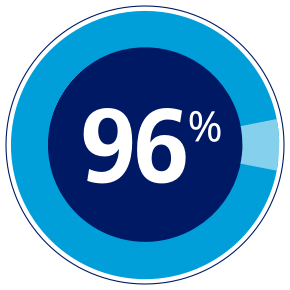 |
| 96% of patients were comfortable with the idea of future self-injection with Norditropin® FlexPro®1,a |
 |
| 0 missed injections in a typical month2 |
| Report from 76% of patients/caregivers using a storage-flexible growth hormone2,b |
|
| William, age 4, born with GHD |
 |
|
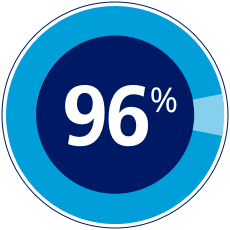
96% of patients were comfortable with the idea of future self-injection with Norditropin® FlexPro®1,a |
| |
|
|
 |
|
| 0 missed injections in a typical month2 |
| Report from 76% of patients/caregivers using a storage-flexible growth hormone2,b |
|
|
|
| aBased on an open-label, uncontrolled study assessing the usability and acceptability of Norditropin® FlexPro® 10 mg in 70 children and adolescents between 10 and <18 years of age on daily treatment of human growth hormone injections. Usability responses were gathered in a face-to-face interview after being given written/verbal instructions for use of the pen; acceptability of the device was also assessed through a 21-item questionnaire for device preparation, ease of use, and learning, as well as patient preference.1 |
| bThis study surveyed 146 respondents (48 patients, 98 caregivers) with experience using one type of GH product (storage-flexible or refrigeration-only). Respondents provided feedback on their GH product with respect to the basic GH therapy overview, typical injection process, how they manage their injection when special occasions or other activities arise, and wastage and storage. The functional and emotional impact of storage-flexible GH products vs that of refrigeration-only GH products on patients’ and caregivers’ daily lives was assessed using a web-based survey.2 |
| Which Norditropin® pen is right for your patients? Our Pen Selector tool can show you the options. |
|
| Selected Important Safety Information |
| Contraindications |
| Norditropin® is contraindicated in patients with: |
| • |
Acute critical illness after open heart surgery, abdominal surgery or multiple accidental trauma, or those with acute respiratory failure due to the risk of increased mortality with use of pharmacologic doses of somatropin |
| • |
Pediatric patients with Prader-Willi syndrome who are severely obese, have a history of upper airway obstruction or sleep apnea, or have severe respiratory impairment due to the risk of sudden death |
| • |
Active Malignancy |
| • |
Hypersensitivity to Norditropin® or any of its excipients. Systemic hypersensitivity reactions have been reported with postmarketing use of somatropin products |
| • |
Active proliferative or severe non-proliferative diabetic retinopathy |
| • |
Pediatric patients with closed epiphyses |
|
|
|
|
| Please see additional Important Safety Information below. |
|
| Designed with patients in mind. |
| The Norditropin® FlexPro® pen has many features to support ease of use, including: |
|
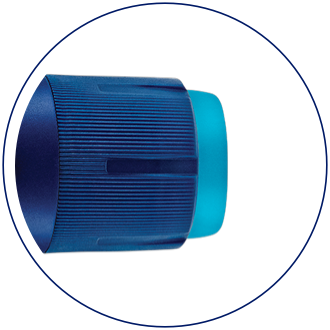 |
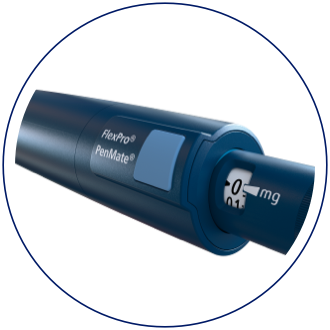
| Easy-to-push dose button1,a |
 |
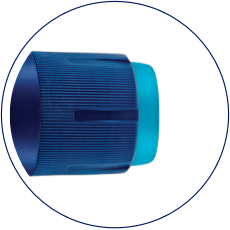
| Optional PenMate® accessory to keep needle hidden3,c,d |
 |
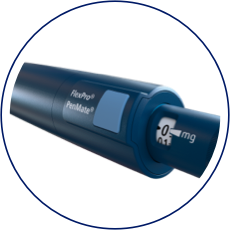
| Room temperature stable for up to 21 days after first injection3,e |
 |
|
Easy-to-push dose button1,a |
 |
|
Optional PenMate® accessory to keep needle hidden3,c,d |
 |
|
Room temperature stable for up to 21 days after first injection3,e |
|
| FlexPro® also allows for fine dosing increments so you can individualize your patients’ treatment.3,f |
|
|
| cNeedles are sold separately, will need a prescription, and need to be processed by a pharmacist. |
| dPenMate® is available for Norditropin® FlexPro® 5, 10, and 15 mg pens only. It is reusable.3 |
| eAll unused Norditropin® FlexPro® prefilled pens must be refrigerated (36 °F to 46 °F) prior to first use. Do not freeze, and avoid direct light. After first injection, Norditropin® pens can either be stored outside of the refrigerator (up to 77 °F) for use within 3 weeks, or in the refrigerator (between 36 °F and 46 °F) for use within 4 weeks.3 |
| fDosing increments for Norditropin® FlexPro® pens: 0.025 mg for 5 mg/1.5 mL pens, 0.05 mg for 10 mg/1.5 mL pens, 0.1 mg for 15 mg/1.5 mL pens, 0.1 mg for 30 mg/3 mL pens.3 |
|
| Indications and Usage |
| Norditropin® (somatropin) injection is indicated for the treatment of pediatric patients with: |
| • |
growth failure due to inadequate secretion of endogenous growth hormone (GH) |
| • |
short stature associated with Noonan syndrome, |
| • |
short stature associated with Turner syndrome, |
| • |
short stature born small for gestational age (SGA) with no catch-up growth by age 2 to 4 years of age |
| • |
Idiopathic Short Stature (ISS), height standard deviation score (SDS) <-2.25, and associated with growth rates unlikely to permit attainment of adult height in the normal range |
| • |
growth failure due to Prader-Willi syndrome (PWS) |
|
| Norditropin® is also indicated for the replacement of endogenous GH in adults with growth hormone deficiency (GHD) |
| Important Safety Information (cont.) |
| Warnings and Precautions |
| • |
Increased mortality in patients with acute critical illness due to complications following open heart or abdominal surgery or multiple accidental trauma, or those with respiratory failure has been reported. |
| • |
Sudden death in pediatric patients with Prader-Willi Syndrome has been reported after initiating treatment with somatropin with one or more of the following risk factors: severe obesity, history of upper airway obstruction or sleep apnea, or unidentified respiratory infection. Evaluate patients for signs of upper airway obstruction and sleep apnea before initiation of treatment. |
| • |
Increased risk of neoplasms: Monitor patients with preexisting tumors for progression or recurrence. In childhood cancer survivors who were treated with radiation to the brain/head for their first neoplasm and who developed subsequent GHD and were treated with somatropin, an increased risk of a second neoplasm, in particular meningiomas, has been reported. Pediatric patients with certain rare genetic causes of short stature have an increased risk of developing malignancies and should be carefully monitored for development of neoplasms. Monitor patients carefully for increased growth, or potential malignant changes, of preexisting nevi. |
| • |
Glucose intolerance and diabetes mellitus: Treatment with somatropin may decrease insulin sensitivity, particularly at higher doses. New-onset type 2 diabetes mellitus has been reported. Monitor glucose levels in all patients. Doses of concurrent antidiabetic drugs may require adjustment. |
| • |
Intracranial hypertension has been reported in a small number of patients, usually within the first 8 weeks of somatropin treatment. Funduscopic examination should be performed before initiating treatment and periodically thereafter. |
| • |
Severe hypersensitivity: Serious systemic hypersensitivity reactions including anaphylactic reactions and angioedema have been reported with postmarketing use of somatropin products. |
| • |
Fluid retention in adults (clinically manifesting as edema, arthralgia, myalgia, nerve compression syndromes including carpal tunnel syndrome/paraesthesias) may frequently occur and is usually transient and dose-dependent. |
| • |
Hypoadrenalism: Patients who have or are at risk for pituitary hormone deficiency(s) may be at risk for reduced serum cortisol levels and/or unmasking of central (secondary) hypoadrenalism. In addition, patients treated with glucocorticoid replacement for previously diagnosed hypoadrenalism may require an increase in their maintenance or stress doses following initiation of Norditropin® treatment. |
| • |
Hypothyroidism if undiagnosed/untreated, may prevent an optimal response to Norditropin®, in particular, the growth response in pediatric patients. In patients with GHD, central (secondary) hypothyroidism may first become evident or worsen during somatropin treatment. Periodic thyroid function tests and thyroid hormone replacement therapy should be initiated or adjusted when indicated. |
| • |
Slipped capital femoral epiphysis in pediatric patients may occur more frequently in patients with endocrine disorders or in patients undergoing rapid growth. Pediatric patients with the onset of a limp or complaints of hip or knee pain should be evaluated. |
| • |
Progression of preexisting scoliosis in pediatric patients can occur in patients who experience rapid growth. Patients with a history of scoliosis should be monitored for progression. |
| • |
Pancreatitis: Cases of pancreatitis have been reported. Pancreatitis should be considered in any patient who develops persistent severe abdominal pain. |
| • |
Lipoatrophy: Tissue atrophy may result when somatropin is administrated subcutaneously at the same site over a long period of time. Rotate injection sites when administering Norditropin® to reduce this risk. |
|
| Adverse Reactions |
| • |
Other common adverse reactions in adults and pediatric patients include: upper respiratory infection, fever, pharyngitis, headache, otitis media, edema, arthralgia, paresthesia, myalgia, peripheral edema, flu syndrome, and impaired glucose tolerance |
|
| Drug Interactions |
| • |
Glucocorticoids: Patients treated with glucocorticoid for hypoadrenalism may require an increase in their maintenance or stress doses following initiation of Norditropin® |
| • |
Pharmacologic Glucocorticoid Therapy and Supraphysiologic Glucocorticoid Treatment: Adjust glucocorticoid replacement dosing in pediatric patients receiving glucocorticoid treatment to avoid both hypoadrenalism and an inhibitory effect on growth |
| • |
Cytochrome P450-Metabolized Drugs: Norditropin® may alter the clearance. Monitor carefully if used with Norditropin® |
| • |
Oral Estrogen: Larger doses of Norditropin® may be required |
| • |
Insulin and/or Other Hypoglycemic Agents: Dose adjustment of insulin or hypoglycemic agent may be required |
|
| Use in Specific Populations |
| • |
Pregnancy and Nursing Mothers: There are limited data with somatropin use in pregnant women and nursing mothers to inform a drug-associated risk for adverse developmental outcomes. |
| • |
Geriatric Use: The safety and effectiveness in patients aged 65 and over has not been evaluated in clinical studies. |
|
| Please click here for Norditropin® Prescribing Information. |
|
|
|
| References: |
| 1. |
Fuchs GS, Mikkelsen S, Knudsen TK, Kappelgaard AM. Ease of use and acceptability of a new pen device for the administration of growth hormone therapy in pediatric patients: an open-label, uncontrolled usability test. Clin Ther. 2009; 31(12):2906-2914. |
| 2. |
Kappelgaard AM, Metzinger CP, Schnabel D. A web-based survey assessing the impact of storage flexibility on the daily life of patients and caregivers administering growth hormone. Expert Rev Med Devices. 2015;12(5):517-527. |
| 3. |
Norditropin [prescribing information]. Plainsboro, NJ: Novo Nordisk Inc; 2020. |
|
|
|
<%@ include view='hcpColoradoFooter' %>
|
Please do not respond to this email. If you would like to contact us, please click here or call
1-800-727-6500. |
| UNSUBSCRIBE NOTICE |
| If you no longer want to receive communications from Novo Nordisk, click here to unsubscribe. You also may call us at 1-877-744-2579 or send us a letter that includes your full contact information (e.g. name, email address, phone) to Novo Nordisk, 800 Scudders Mill Road, Plainsboro, New Jersey 08536. To better understand how Novo Nordisk values your privacy, see our Privacy Statement. |
|
Norditropin®, FlexPro®, and PenMate® are registered trademarks of Novo Nordisk Health Care AG.
Novo Nordisk is a registered trademark of Novo Nordisk A/S.
All other trademarks, registered or unregistered, are the property of their respective owners.
© 2021 Novo Nordisk All rights reserved. US21NORD00070 June 2021 |
 |
|
|
|
|
|