|
|
 |
| For pediatric patients with growth failure due to inadequate secretion of endogenous growth hormone (GH) and Prader-Willi Syndrome; short stature associated with Noonan Syndrome, Turner Syndrome, and children born small for gestational age; idiopathic short stature; and for the replacement of endogenous GH in adults with growth hormone deficiency (GHD). See below for full indication. |
|
|
| A growth hormone therapy with data from a real-world setting.1 |
| Norditropin® was assessed in an observational study that allowed evaluation of its safety and effectiveness in pediatric patients in a real-world setting.1 |
|
| Scroll down for a summary of results. |
 |
|
| Selected Important Safety Information |
| Contraindications |
| Norditropin® is contraindicated in patients with: |
| • |
Acute critical illness after open heart surgery, abdominal surgery or multiple accidental trauma, or those with acute respiratory failure due to the risk of increased mortality with use of pharmacologic doses of somatropin |
| • |
Pediatric patients with Prader-Willi syndrome who are severely obese, have a history of upper airway obstruction or sleep apnea, or have severe respiratory impairment due to the risk of sudden death |
| • |
Active Malignancy |
| • |
Hypersensitivity to Norditropin® or any of its excipients. Systemic hypersensitivity reactions have been reported with postmarketing use of somatropin products |
| • |
Active proliferative or severe non-proliferative diabetic retinopathy |
| • |
Pediatric patients with closed epiphyses |
|
|
|
| Please click here or scroll below for additional Important Safety Information. |
|
|
|
| Pediatric patients observed as part of the study1 |
|
|
|
| No additional safety concerns were observed1 |
|
|
| Mean change in HSDS from baseline peaked at Year 1 |
| in pediatric patients across 5 of the FDA-approved indications1,a,b |
|
|
|
|
| See study design below. |
| aGrowth hormone deficiency (GHD), small for gestational age (SGA), Turner syndrome, Idiopathic Short Stature (ISS), and Prader-Willi Syndrome (PWS).1 |
| bAt Year 1 of follow-up, n=6123 for GHD, n=591 for SGA, n=417 for Turner syndrome, n=1569 for ISS, and n=47 for PWS.1 |
|

|
|
| Help your patients access treatment |
| Norditropin® is covered for nearly 9 of 10 patients on commercial and Medicaid plans nationwide.1,c Verify benefits and explore other services offered through NovoCare®. |
|
|
|
| cPreferred status BioPharm Insights as of January 2022. |
| The ANSWER Program: An Observational Study (Registry) Assessing Treatment Outcomes and Safety for Children and Adults Who Are Prescribed Norditropin® (Human Growth Hormone) |
| Participants: |
| The study population consisted of children and adults treated with commercially available Norditropin® for an appropriate diagnostic indication as prescribed by their physician in the course of routine clinical practice. |
| Pediatric: |
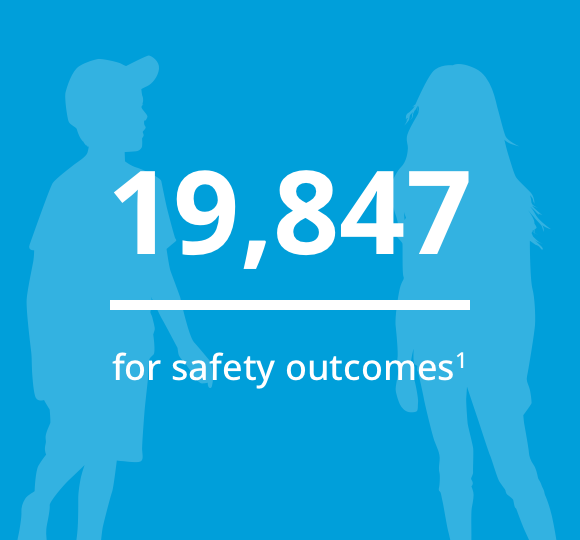
| ANSWER had 19,847 pediatric patients in the full analysis set (FAS), used to evaluate safety outcomes, and 12,660 in the effectiveness analysis set (EAS), used to analyze effectiveness outcomes.1 |
| Pediatric patients in the FAS included GH-naïve and non-naïve individuals.1 Patients were included in the FAS if Norditropin® was initiated before the age of 18 years. Pediatric patients could be treated to final height after the age of 18 years. Patients with GH treatment initiation before 18 years of age and Norditropin® treatment initiation after the age of 18 years and no Norditropin® treatment after the age of 20 years were also included in the pediatric FAS.1 In the FAS, mean duration of GH treatment within the study was 2.305 years for GHD (SD: 12.79), 2.432 years for SGA (SD: 2.120), 3.090 years for TS (SD: 2.580), 2.147 years for ISS (SD: 5.188), 2.686 years for Noonan syndrome (NS) (SD: 2.111), and 3.522 years for PWS (SD: 3.110).1 |
| Pediatric patients in the EAS were included in the FAS, GH-naïve at baseline, had valid baseline height, age, and dosing information, and were diagnosed with one of the following: GHD, SGA, TS, ISS, NS, or PWS.1 In the EAS, mean duration of GH treatment within the study was 2.195 years for GHD (SD: 15.46), 2.240 years for SGA (SD: 2.014), 3.05 years for TS (SD: 2.36), 2.055 years for ISS (SD: 6.015), 2.59 years for NS (SD: 2.02), and 3.331 years for PWS (SD: 3.118).1 |
| Adult: |
| ANSWER included 966 adults in the FAS and 304 in the EAS.1 Adults in the FAS included GH-naïve and non-naïve patients. Patients initiating Norditropin® treatment after the age of 18 years and treated with Norditropin® after the age of 20 years were included in the adult FAS.1 Adults in the EAS were included in the FAS, GH-naïve at baseline, diagnosed with adult GHD, had valid baseline BMI, age, and dosing information, and their first dose was administered at or after the age of 20 years.1 |
| Methods: |
| The ANSWER Program was originally a post-marketing registry of adults and pediatric patients treated with Norditropin® as prescribed by their physician and according to routine clinical practice. Since it did not investigate treatment specifics, it was categorized as a non-interventional, observational study that allowed evaluation of the safety and effectiveness of Norditropin® in a real-world setting. The study included patient data from June 24, 2002 to September 30, 2016 from 207 planned sites located within the US, of which 144 participating sites were active at Last Patient Last Visit.1 Participating physicians made all diagnostic and therapeutic decisions according to their routine clinical practice, including frequency of visits, and recorded patient data in electronic case report forms using the NovoNet® web application.1 The sponsor did not provide Norditropin® to the patients in this observational study. Norditropin® was available as cartridges for use with NordiPen® (5 mg/1.5 mL and 15 mg/1.5 mL), or pre-filled NordiFlex® (5 mg/1.5 mL, 10 mg/1.5 mL, 15 mg/1.5 mL, and 30 mg/3.0 mL), and FlexPro® (5 mg/1.5 mL, 10 mg/1.5 mL, and 15 mg/1.5 mL) for subcutaneous injection.1 There were 4 analysis sets including a FAS and an EAS for each of the adult and pediatric patient populations. The FAS was used to evaluate the safety information and all effectiveness endpoints were evaluated using the EAS.1 The primary endpoint for short-term outcomes (within 1 year) was change in HSDS for pediatric patients, and waist-to-hip circumference ratio for adult and transition GHD patients. Descriptive statistics were applied for these endpoints.1 |
|
| Indications and Usage |
| Norditropin® (somatropin) injection is indicated for the treatment of pediatric patients with: |
| • |
growth failure due to inadequate secretion of endogenous growth hormone (GH) |
| • |
short stature associated with Noonan syndrome, |
| • |
short stature associated with Turner syndrome, |
| • |
short stature born small for gestational age (SGA) with no catch-up growth by age 2 to 4 years of age |
| • |
Idiopathic Short Stature (ISS), height standard deviation score (SDS) <-2.25, and associated with growth rates unlikely to permit attainment of adult height in the normal range |
| • |
growth failure due to Prader-Willi syndrome (PWS) |
|
| Norditropin® is also indicated for the replacement of endogenous GH in adults with growth hormone deficiency (GHD) |
| Important Safety Information (cont.) |
| Warnings and Precautions |
| • |
Increased mortality in patients with acute critical illness due to complications following open heart or abdominal surgery or multiple accidental trauma, or those with respiratory failure has been reported. |
| • |
Sudden death in pediatric patients with Prader-Willi Syndrome has been reported after initiating treatment with somatropin with one or more of the following risk factors: severe obesity, history of upper airway obstruction or sleep apnea, or unidentified respiratory infection. Evaluate patients for signs of upper airway obstruction and sleep apnea before initiation of treatment. |
| • |
Increased risk of neoplasms: Monitor patients with preexisting tumors for progression or recurrence. In childhood cancer survivors who were treated with radiation to the brain/head for their first neoplasm and who developed subsequent GHD and were treated with somatropin, an increased risk of a second neoplasm, in particular meningiomas, has been reported. Pediatric patients with certain rare genetic causes of short stature have an increased risk of developing malignancies and should be carefully monitored for development of neoplasms. Monitor patients carefully for increased growth, or potential malignant changes, of preexisting nevi. |
| • |
Glucose intolerance and diabetes mellitus: Treatment with somatropin may decrease insulin sensitivity, particularly at higher doses. New-onset type 2 diabetes mellitus has been reported. Monitor glucose levels in all patients. Doses of concurrent antidiabetic drugs may require adjustment. |
| • |
Intracranial hypertension has been reported in a small number of patients, usually within the first 8 weeks of somatropin treatment. Funduscopic examination should be performed before initiating treatment and periodically thereafter. |
| • |
Severe hypersensitivity: Serious systemic hypersensitivity reactions including anaphylactic reactions and angioedema have been reported with postmarketing use of somatropin products. |
| • |
Fluid retention in adults (clinically manifesting as edema, arthralgia, myalgia, nerve compression syndromes including carpal tunnel syndrome/paraesthesias) may frequently occur and is usually transient and dose-dependent. |
| • |
Hypoadrenalism: Patients who have or are at risk for pituitary hormone deficiency(s) may be at risk for reduced serum cortisol levels and/or unmasking of central (secondary) hypoadrenalism. In addition, patients treated with glucocorticoid replacement for previously diagnosed hypoadrenalism may require an increase in their maintenance or stress doses following initiation of Norditropin® treatment. |
| • |
Hypothyroidism if undiagnosed/untreated, may prevent an optimal response to Norditropin®, in particular, the growth response in pediatric patients. In patients with GHD, central (secondary) hypothyroidism may first become evident or worsen during somatropin treatment. Periodic thyroid function tests and thyroid hormone replacement therapy should be initiated or adjusted when indicated. |
| • |
Slipped capital femoral epiphysis in pediatric patients may occur more frequently in patients with endocrine disorders or in patients undergoing rapid growth. Pediatric patients with the onset of a limp or complaints of hip or knee pain should be evaluated. |
| • |
Progression of preexisting scoliosis in pediatric patients can occur in patients who experience rapid growth. Patients with a history of scoliosis should be monitored for progression. |
| • |
Pancreatitis: Cases of pancreatitis have been reported. Pancreatitis should be considered in any patient who develops persistent severe abdominal pain. |
| • |
Lipoatrophy: Tissue atrophy may result when somatropin is administrated subcutaneously at the same site over a long period of time. Rotate injection sites when administering Norditropin® to reduce this risk. |
|
| Adverse Reactions |
| • |
Other common adverse reactions in adults and pediatric patients include: upper respiratory infection, fever, pharyngitis, headache, otitis media, edema, arthralgia, paresthesia, myalgia, peripheral edema, flu syndrome, and impaired glucose tolerance |
|
| Drug Interactions |
| • |
Glucocorticoids: Patients treated with glucocorticoid for hypoadrenalism may require an increase in their maintenance or stress doses following initiation of Norditropin® |
| • |
Pharmacologic Glucocorticoid Therapy and Supraphysiologic Glucocorticoid Treatment: Adjust glucocorticoid replacement dosing in pediatric patients receiving glucocorticoid treatment to avoid both hypoadrenalism and an inhibitory effect on growth |
| • |
Cytochrome P450-Metabolized Drugs: Norditropin® may alter the clearance. Monitor carefully if used with Norditropin® |
| • |
Oral Estrogen: Larger doses of Norditropin® may be required |
| • |
Insulin and/or Other Hypoglycemic Agents: Dose adjustment of insulin or hypoglycemic agent may be required |
|
| Use in Specific Populations |
| • |
Pregnancy and Nursing Mothers: There are limited data with somatropin use in pregnant women and nursing mothers to inform a drug-associated risk for adverse developmental outcomes. |
| • |
Geriatric Use: The safety and effectiveness in patients aged 65 and over has not been evaluated in clinical studies. |
|
| Please click here for Norditropin® Prescribing Information. |
|
|
|
| References: |
| 1. |
Data on file. Novo Nordisk Inc; Plainsboro, NJ. |
|
|
Please do not respond to this email. If you would like to contact us, please click here or call
. |
| UNSUBSCRIBE NOTICE |
| If you no longer want to receive communications from Novo Nordisk, click here to unsubscribe. You also may call us at or send us a letter that includes your full contact information (e.g. name, email address, phone) to Novo Nordisk, 800 Scudders Mill Road, Plainsboro, New Jersey 08536. To better understand how Novo Nordisk values your privacy, see our Privacy Statement. |
|
Norditropin®, NovoCare®, and FlexPro® are registered trademarks of Novo Nordisk Health Care AG.
Novo Nordisk is a registered trademark of Novo Nordisk A/S.
All other trademarks, registered or unregistered, are the property of their respective owners.
© 2021 Novo Nordisk All rights reserved. US21NORD00072 September 2021 |
 |
|
|
|
|
|